Jacqueline Garbanzo// Valle Central
AF-S NIKKOR 24–70mm f/2.8G
Themes:
Coffee Price Volatility
Cooperative Governing Structures
Community Empowerment
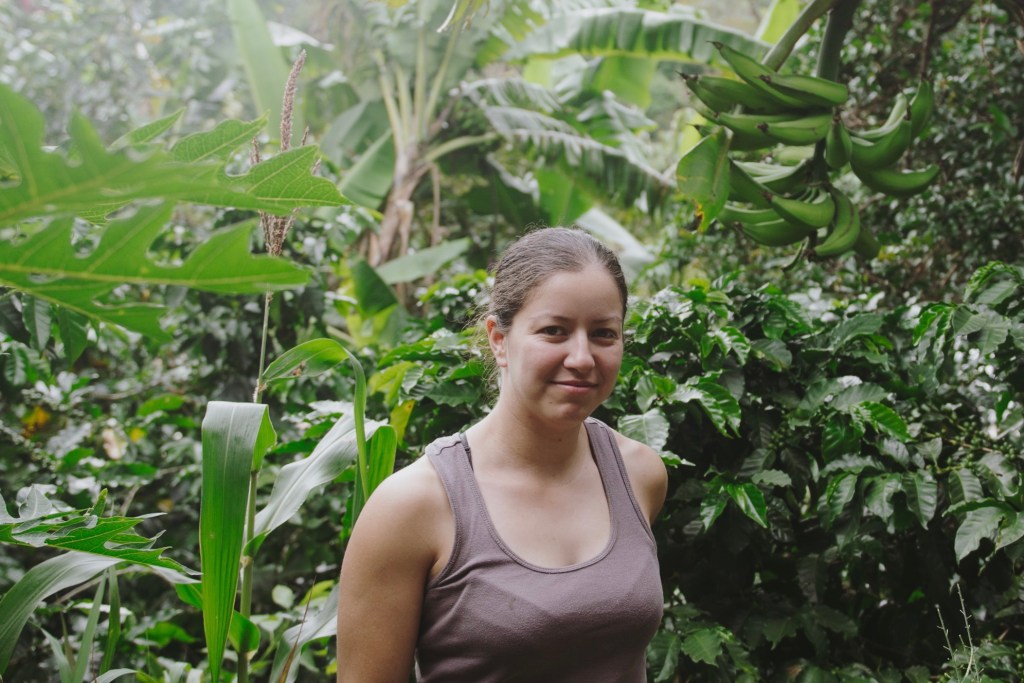
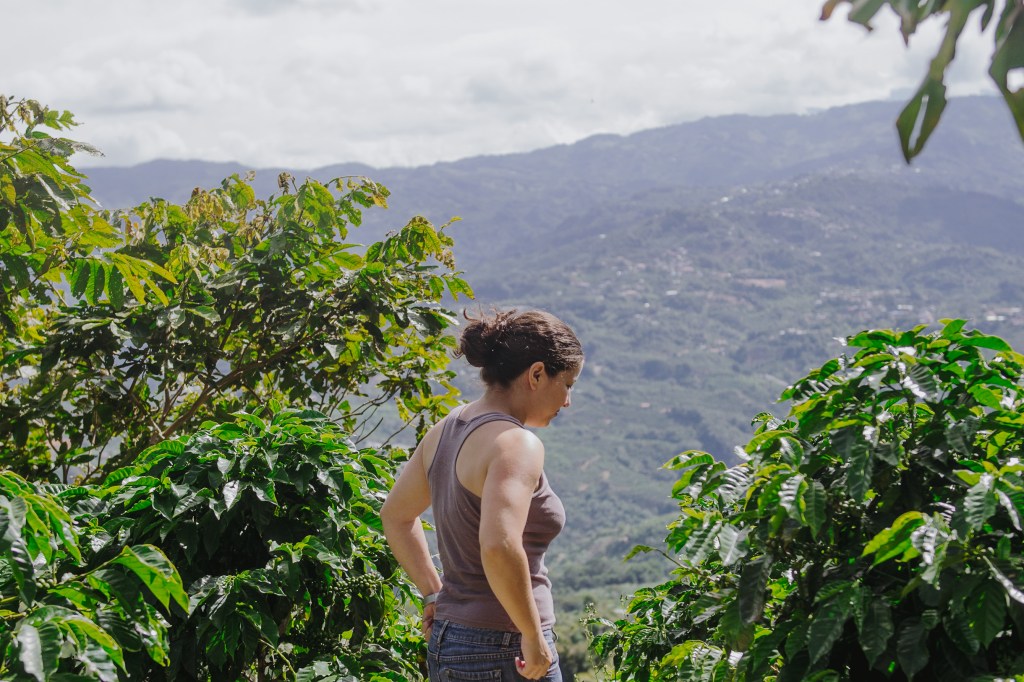
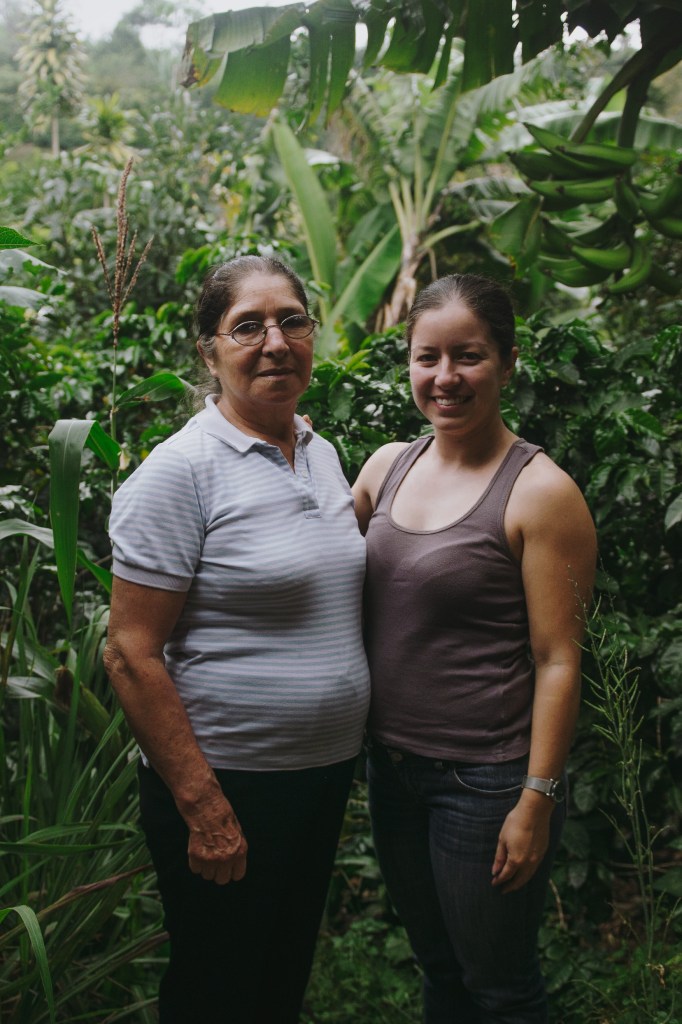
Jacqueline Garbanzo standing in front of her coffee and plantain trees (2019).
Co-Existing: Coffee, Cooperatives, & Community
Jackie Garbanzo is one of Bean Voyage’s Care Fellows. Her community zone is called Bustamante, which is located in the Central Valley—one of Costa Rica’s premier zones for producing fine quality coffee. Tarrazu, perhaps the best-known region, lies on the opposite hill side of the valley.
The meaning of coffee for Jacqueline:
It is 6 pm and Jackie has just finished her work shift. She works as an accountant in San Jose and drives to and from her office every single day. She leaves her home at 4:30 am so she can hit the gym before work, which starts at 7 am. When she leaves in the morning, the sun has yet to come up, and when she returns home, the sun has already gone down. Jackie says she does not mind driving this far—it is better than living in the city.
In the city there is no tranquility, no peace, no confidence of getting home safe. On the other hand, the country is tranquility– no noise or anything. You can hear the animals at night; you can hear foxes and birds. I prefer these sounds to hearing shouts from the street. As I say, coffee is all of this [the country] and it gives all of this. All my life I have been in the coffee fields, so I value it, and I love it.
ackie lives at home with her mother, Flor, and her younger brother, who also commutes daily into the city. Out of all of Flor’s children, Jackie is the only one who is interested in and passionate about maintaining and working on their family’s coffee fields. Since coffee farming is economically unprofitable, Jackie can only dedicate part of her time to the fields. Her mother administers everything and delegates a long-time friend to tend to their coffee field weekly by fertilizing, cleaning, and trimming.
Jackie worries about who will tend to their family’s coffee fields once her mother passes away. Her brothers do not want to inherit the coffee land, so it is unclear who will take over. However, Jackie says, “We’ll cross that bridge later.”
Daybreak
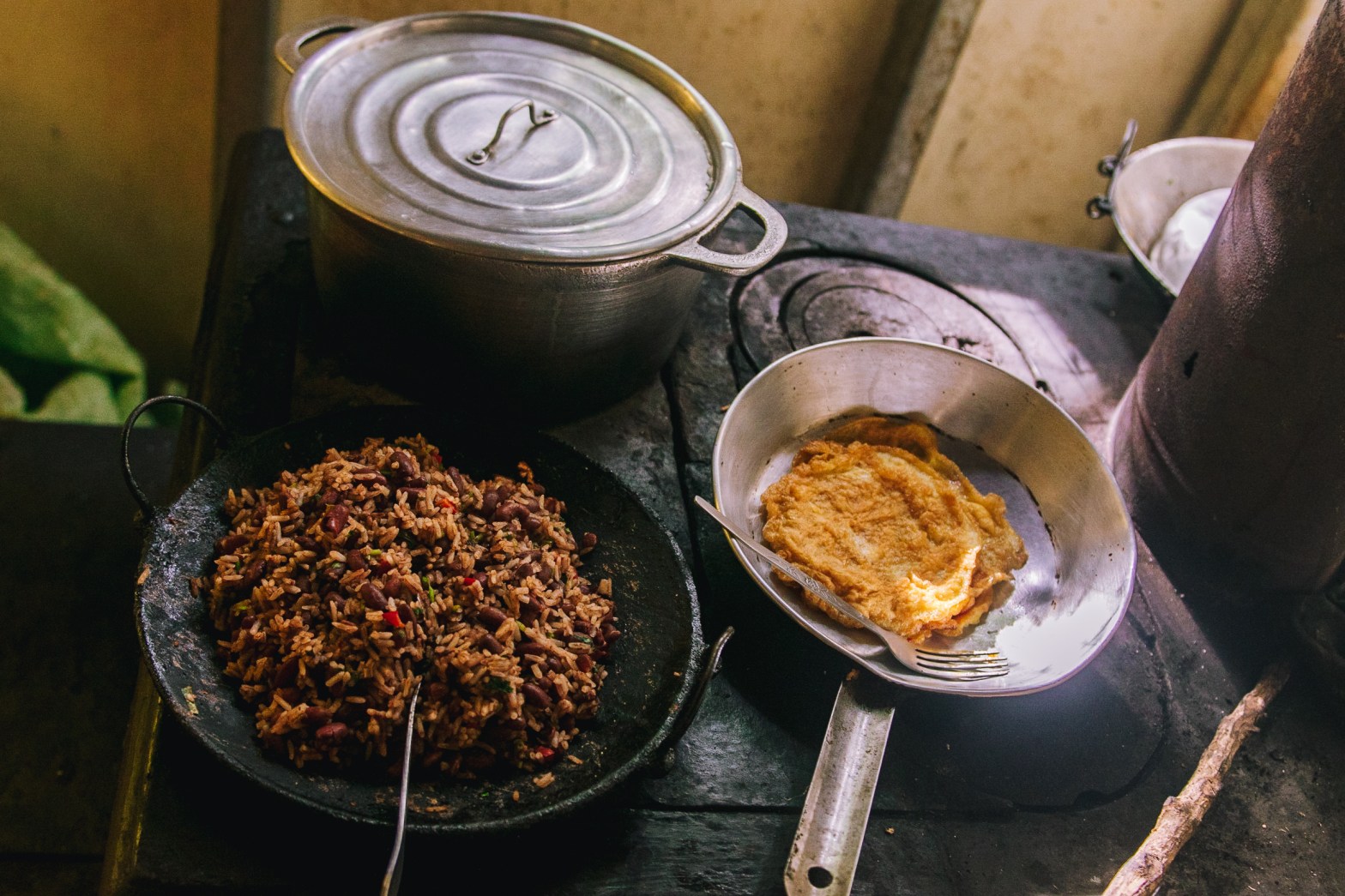
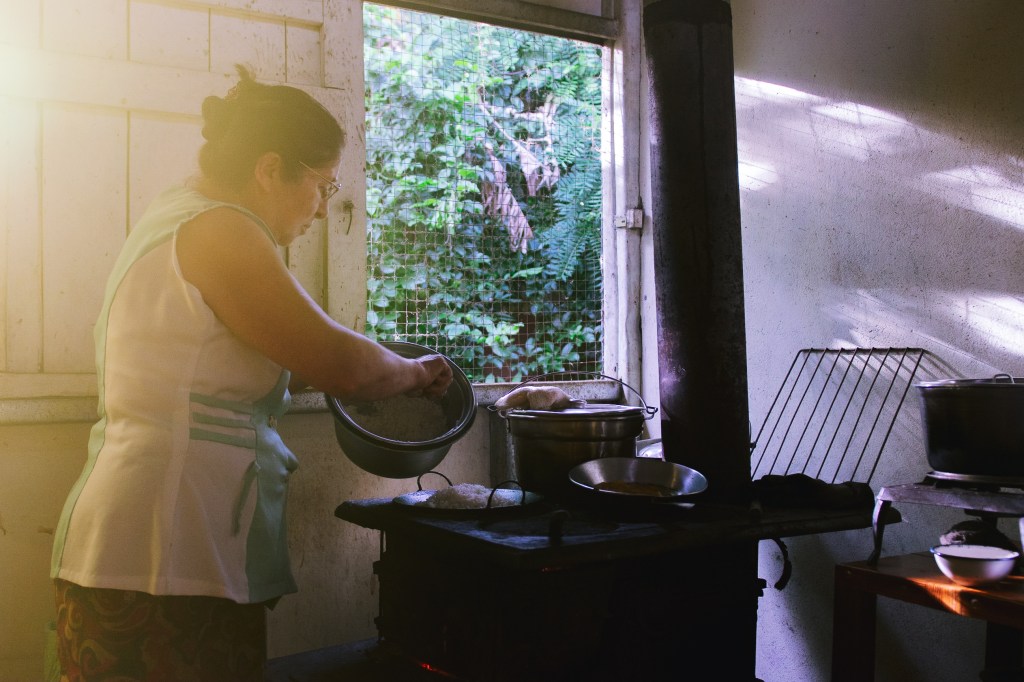
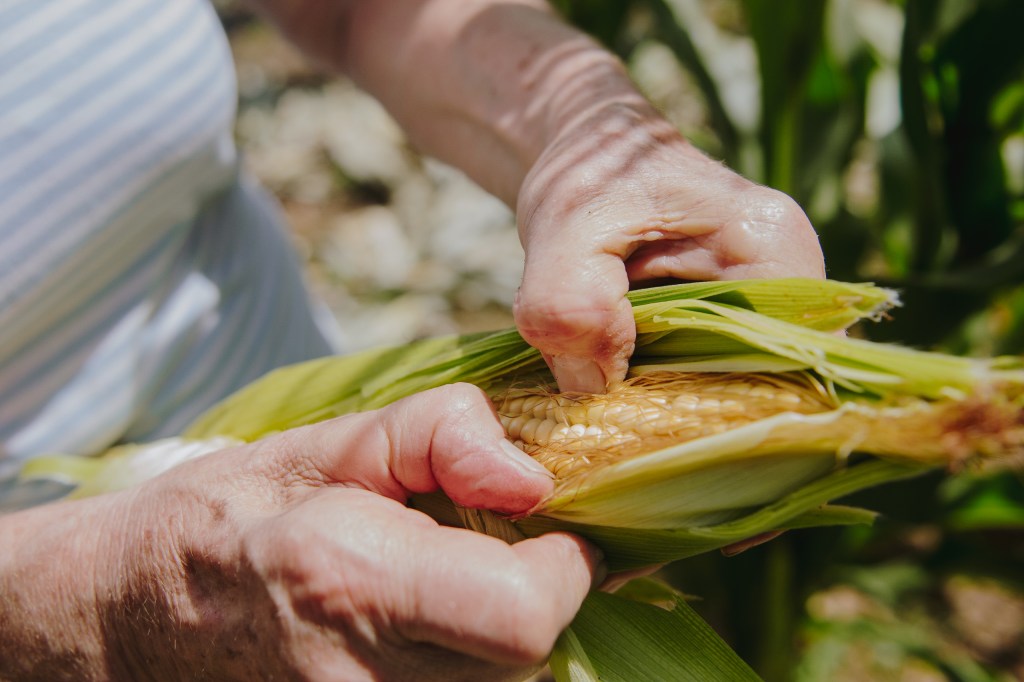
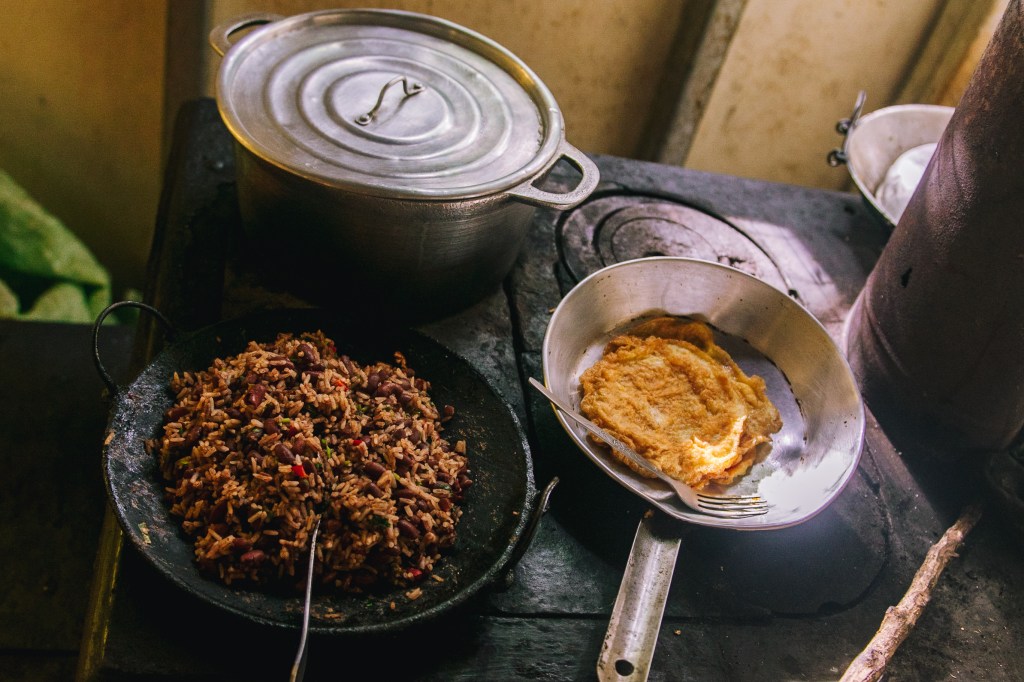
Every day is met with a cup of black coffee and a heaping plate of gallo pinto—rice and beans smothered in Lizano sauce. However, it is the weekend, which means that Jackie gets to watch her mother, Flor, prepare breakfast in the morning light instead of heading to work. Flor cooks the gallo pinto on her wood burning stove using a porous stone disk. The white rice turns to light purple when the black beans are added. Chopped bell pepper and cilantro are added after. She also heats corn tortillas— made with corn that she cultivated— on the stone disc and places them in banana leaves to retain the heat. Flor describes the process of harvesting her corn while the kernels are still juicy and soft, then grinding them, and making a dough.
Flor begins to heat the water for coffee prepared in the chorreador. For Flor, the value of coffee is highly shaped by its economic profitably. Coffee, for as far back as she can remember, brings an income—simply put. Coffee for her is a cash crop, something to be sold, not consumed—at least not her family’s own coffee. In fact, many coffee producers do not drink the coffee that they grow because of the lack of processing equipment. Never knowing the taste of their coffee that they plant, cultivate, and harvest, it is common for coffee producers to drink one of the many pre-packaged coffees with unknown origins sold at the supermarket.
Different Day, Different Year, Same Challenge
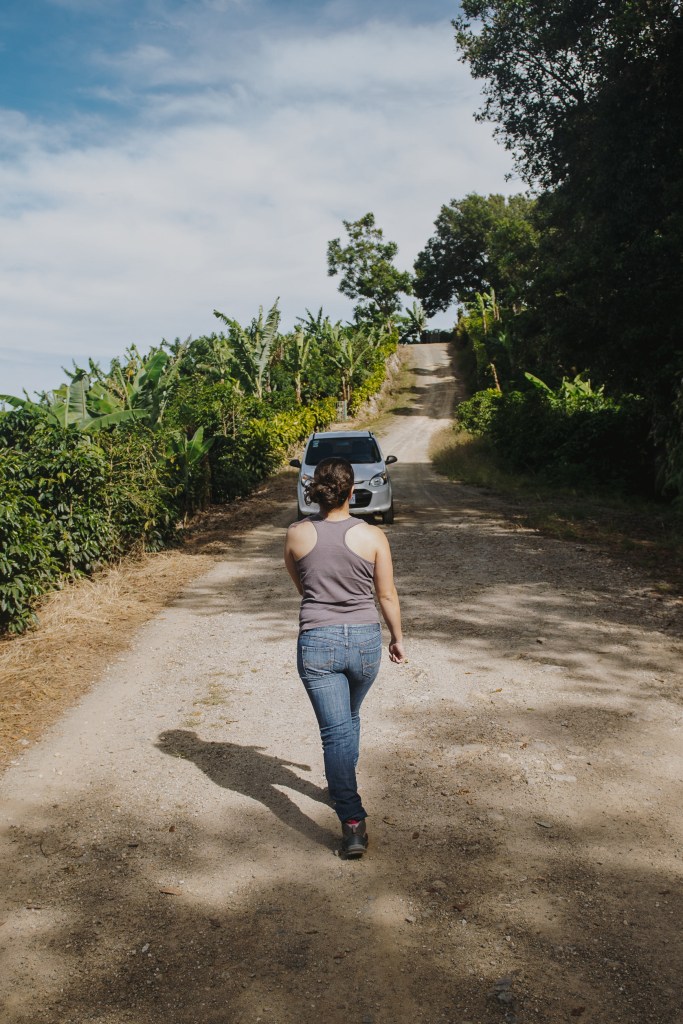
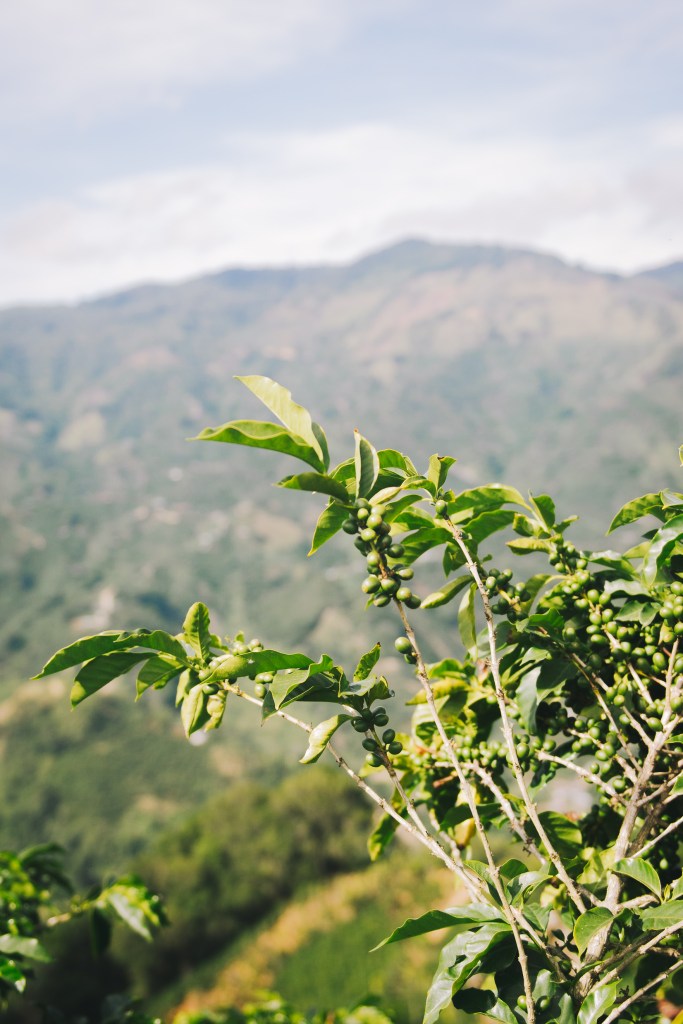
Yesterday, Jackie was wearing slacks and high heels for work in the city. Today, she emerges wearing denim jeans and hiking boots. Jackie proposes that an aerial perspective is the best way to orient yourself to a new place. Naturally, she takes me on a drive up a steep road that evolves into a ridge. Both the left side and right side of the ridge are flanked with coffee trees planted in uniform lines all the way down to the valley floor. Standing atop the ridge, valleys of green extend out to the right and to the left as far as the eye can see. Jackie points out that these green areas are all coffee trees. Both valleys are almost entirely covered with coffee. She comments:
The pay is very little for what is being produced. The fact that a coffee producer is not paid for the work done—this is the hardest thing in coffee. The fall of coffee prices is not a problem of a single year or month, but rather it accumulates and affects us for a long time. It’s very sad for one to see that all the work done over a whole year at the end of the day comes to nothing. It is painful to struggle all year only in the end to not receive what you deserve. So, we keep on, keep on working the coffee because it is something…
Without considering labor costs, the current price of coffee production per pound is $1.10.sd The cost of production taking labor into account is $1.66. If the current market price per lb. of coffee lingers around $1.00 coffee producers are not compensated at all for their labor, and rarely for the coffee that they produce. If coffee prices are below the costs of production, then coffee producers are working in an endless cycle of labor and poverty.
One feels a dull taste, a deception that one hoped for more profit, but at the end of the harvest what happens is a turnover. You have profit, but this profit is used to pay off debt and the debt pays for the profit and it’s like a circle that does not end…
Coffee producers have no choice but to sell their coffee to the cooperatives or private coffee mills cheaply. What other option do they have? Often times, coffee producers do not have the power to demand extra cents paid for their coffee. Producers must relent to the buyers– to the market– and sell their coffee at the cheap commodity price, which is not even a breakeven price. Producing coffee involves physical labor that is hard and year-round. For smallholder coffee producers, this creates a vicious cycle, where labor goes uncalculated and economic obstacles compound each other.
Coffee producers have struggled for decades— and in some cases, much longer— to consistently cover the costs of producing coffee and make a profit. This is the narrative that Jackie knows, and one that she wishes to change.
I want to look for another market because we sell our coffee to a beneficio [a private owned coffee processing mill]. This beneficio belongs to foreign people and they negotiate the final product for the consumer. Between us and this person there are many people, so the earnings from the coffee are divided among this large number of people.
Her eyes scan the valleys below and fixate on the structures and coffee collecting stations that belong to these beneficios. Jackie does not know who exactly owns the beneficio despite selling her coffee to them for generations. She continues the coffee narrative, describing how coffee producers take their coffee cherries to these collectors and dump them into chutes engraved with measurement marks in order to record how much coffee is being delivered.
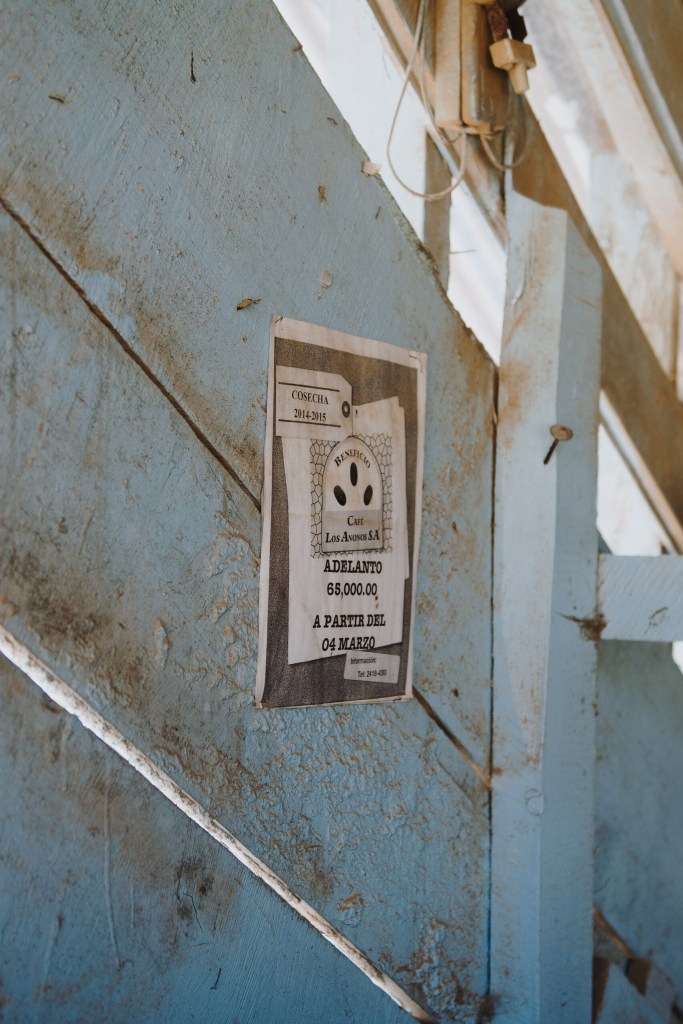
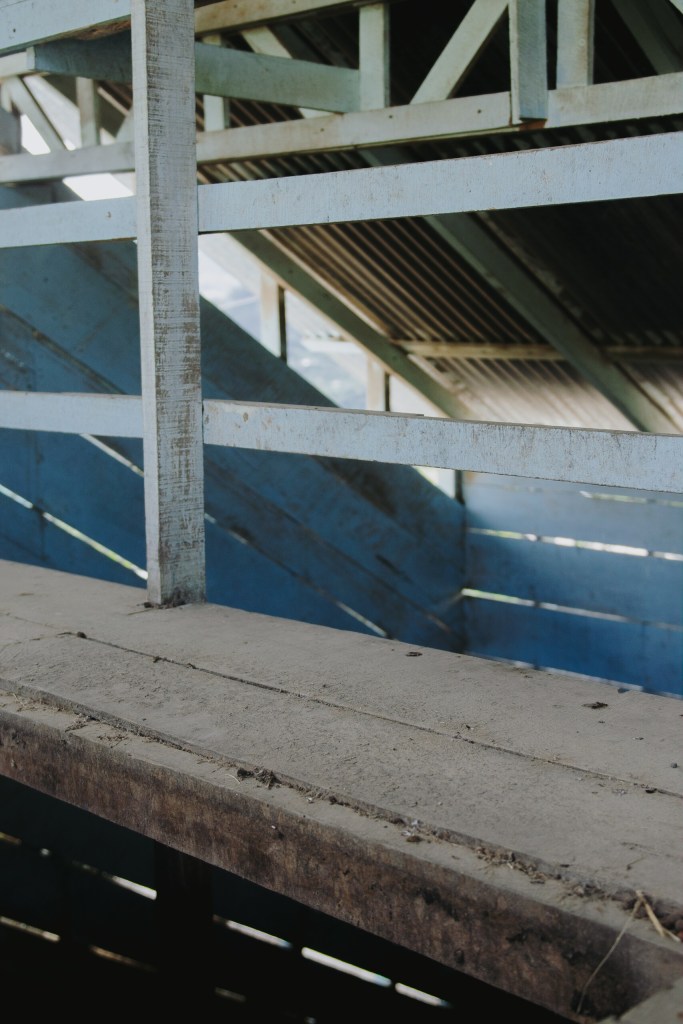
Jackie paces around the collecting stations describing how they are operated by one person during the harvest season who simply marks down the volume of coffee and family name of the delivered coffee cherries. At the end of the day, a large truck from the beneficio or cooperative comes to collect the cherries to bring back to the processing plant. In Bustamante, there are three collecting stations placed directly next to each other. Jackie can see propaganda for various beneficios and cooperatives everywhere she looks: at bus stops, on trash cans, and even on empty wall space. It seems as if each one represents a political party advertising itself to recruit members, even though there may be no discernible price benefits of one over another.
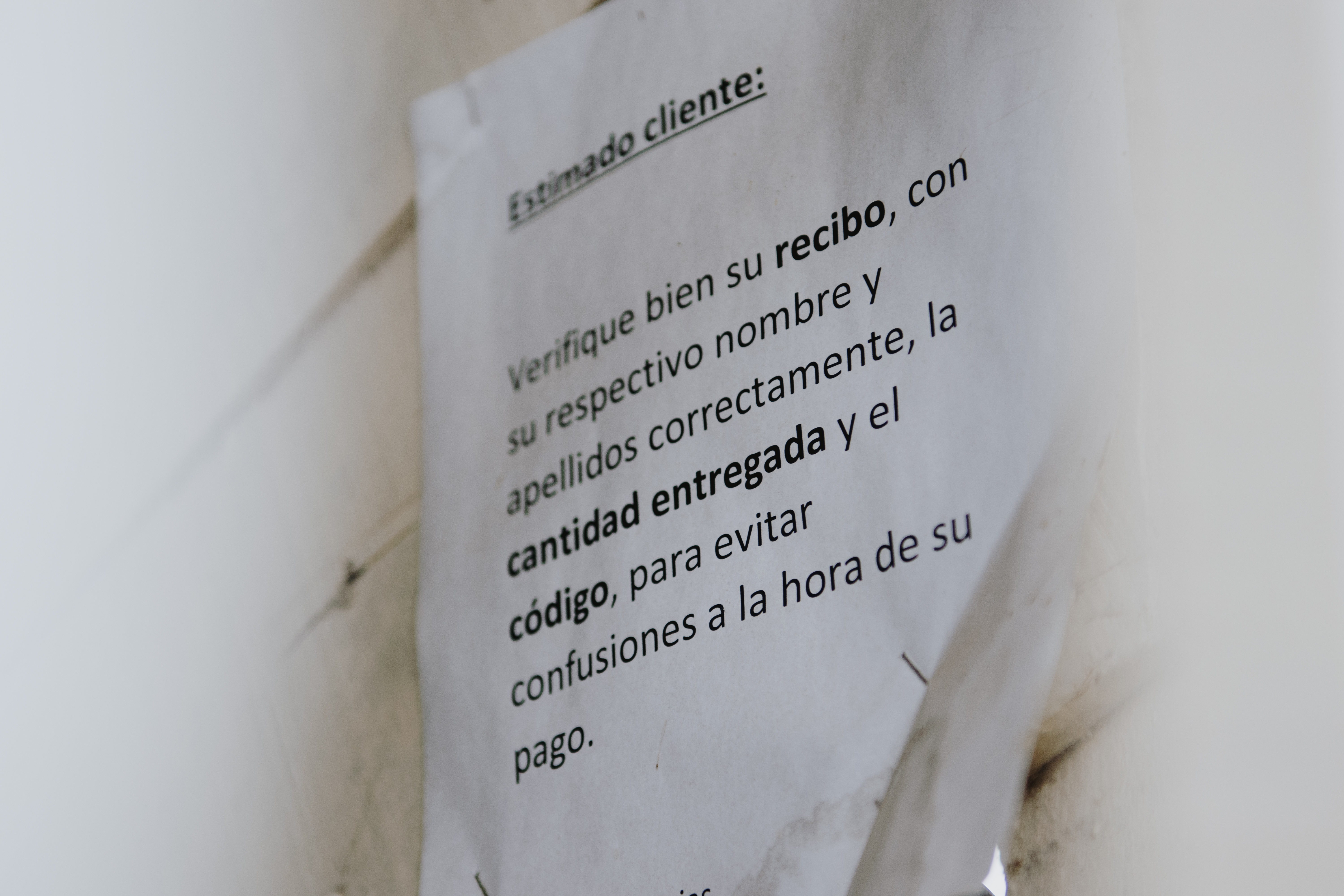
The scene at the coffee collection station where Jackie sells her family’s coffee is one of decay: coffee cherries rotting, signs faded from the sun, and papers listing coffee buying prices with curled edges from the weather (though the listed dates suggest they are from a few years ago). The station itself is a wooden shack with faded paint that barely reveals the cooperative’s name. There is a metal scale to weigh the coffee, but otherwise the place appears lifeless. It is a scene of abandonment. During harvest season, trucks loaded with coffee cherries line up bumper to bumper along the road to dump their cherries, but now the collecting stations are dilapidated and deserted.
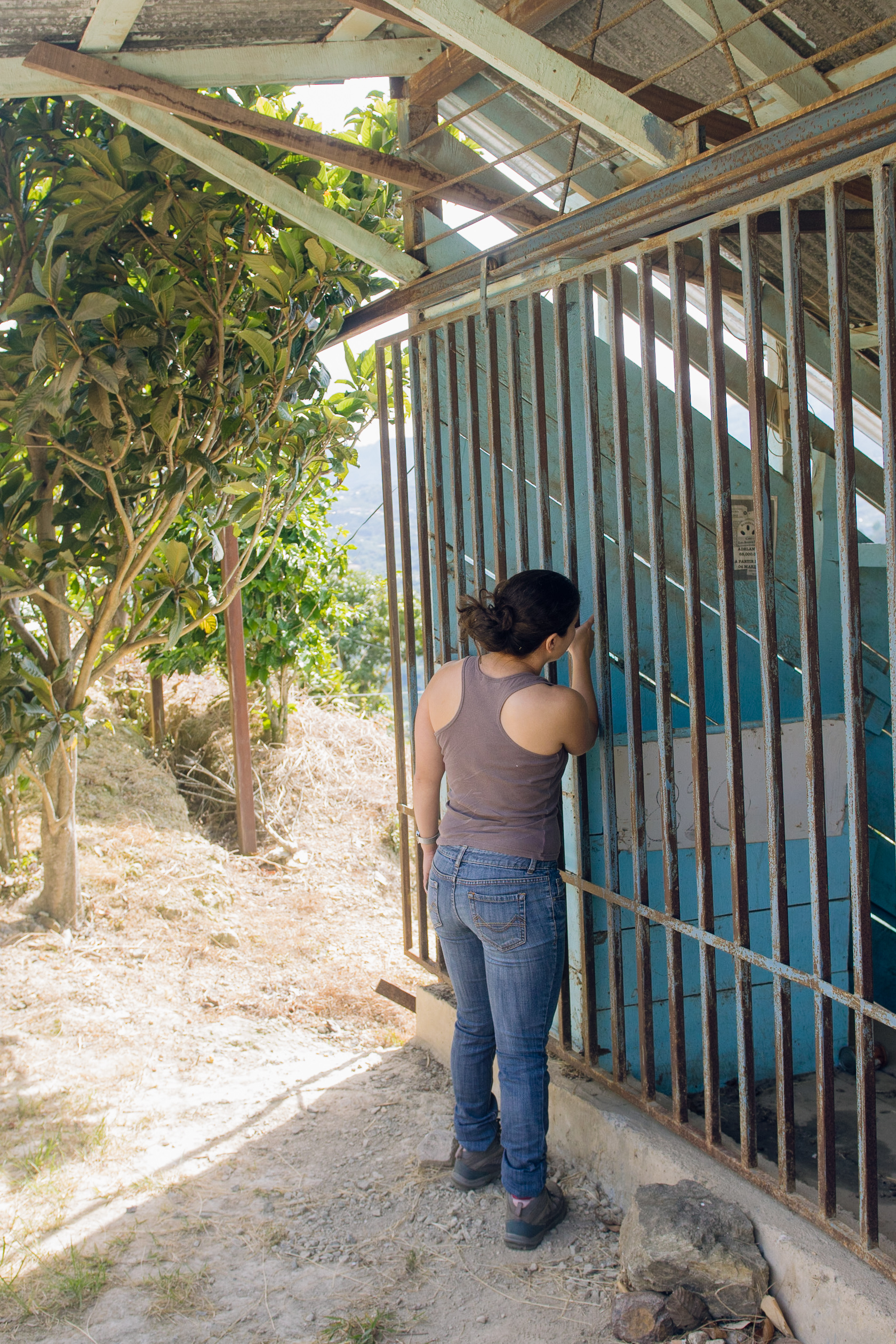
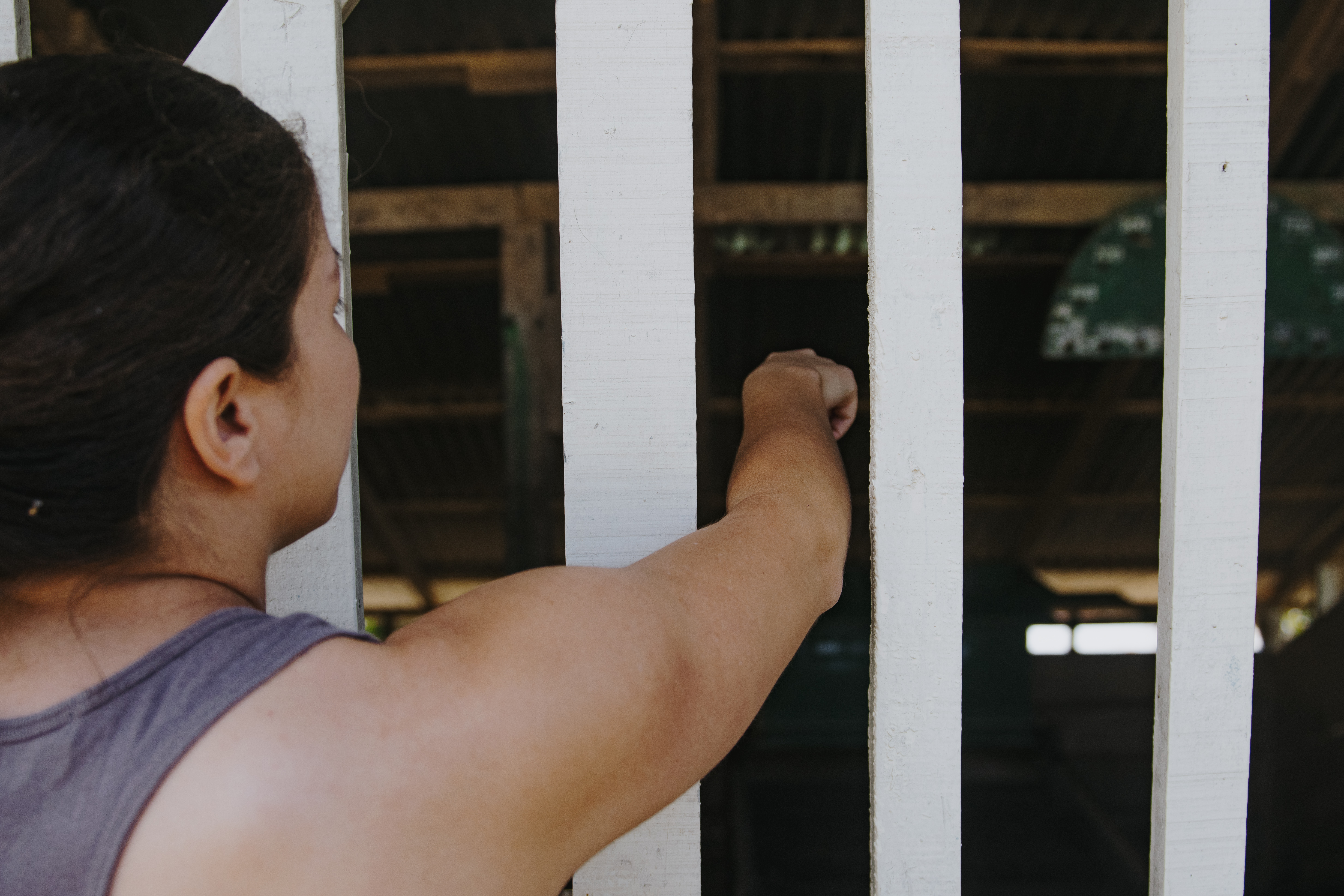
The gate Jackie stands behind keeps people out during the non-harvest season; however, it serves as more than a physical barrier. Like the other coffee producers in her community, Jackie is barred from the buyer and the consumer world. Jackie’s input stops there, right after she dumps her cherries.
I want to create a cooperative that is different. I want to get people to feel and identify with what I want to convey, which is that the people really feel that they are part of the cooperative, and that they don’t just drop off their coffee to be sold, but rather that they feel that they are the ones selling the coffee.
Jackie’s mission is to foster feelings of ownership and belonging through community development and engagement. The town plaza contains only five structures: the church, the grocery store, the school, the soccer field, and the community center. The community center is the largest structure of them all and is constructed with just tin and metal. It features a giant mural of a coffee bean, highlighting the fact that coffee is truly the heart of the town.
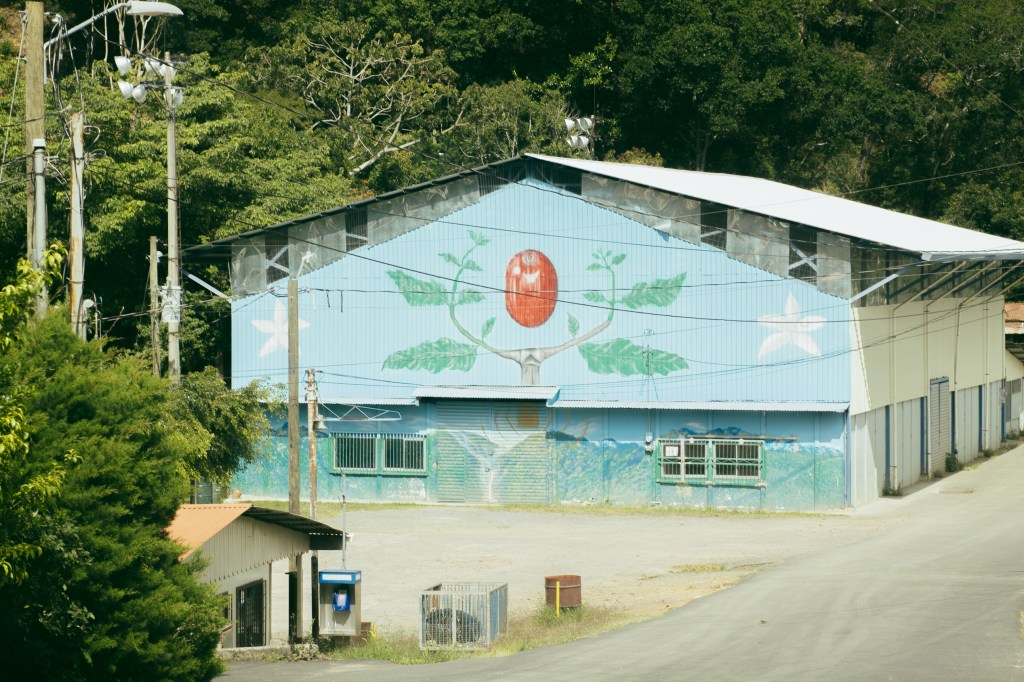
In Jackie’s own words, “I belong to an association for community development. I am a believer in community development; I believe in local government, and that the way to go is have everyone united. This way people feel more identified with the cooperative—there is a difference between the idea that I am making my own company for individual profit where people do not see progress in the community because this would be my own progress. I do not want this, rather that this progress be of the community.”
She explains, “Progress means focusing on what I, as a producer, can do to take care of my coffee. This is something I take seriously. It’s important that a producer understands the chemicals they are applying to the coffee and how it affects the final product. Progress is also about having a technical understanding of coffee. It’s not enough to grow coffee unconsciously every year. We need to take action and make changes in order to achieve different results. Unfortunately, many people are afraid of change and the risks that come with it. However, if we continue doing things the same way, we won’t see any progress. Change will not be seen if we keep on like this.”
If the feeling or the sense of life around a cup of coffee can be many things, for Jackie it means:
To work in the coffee fields is to create an environment. Progress is to have convivencia with other people. The process of production to final consumption creates a convivencia with others and it cultivates relationships with others.
In Jackie’s sense, “convivencia” is to co-exist, but more than that, “convivencia” is to share from the heart.
Sí, algo cerca al corazón—Jackie
———————————————————————-
About the Author:
I spent the summer of 2019 in Costa Rica exploring the sources of ethics, injustice, and success situated in the coffee value chain involved at the producer sphere. I learned that behind the resilient, family- oriented, inspirational and environmentally conscious coffee producers exists an asymmetry in the resources and knowledge for women producers, struggles in gender empowerment, effects of climate change, and cycles of capitalist injustice. Through Bean Voyage, a non-profit dedicated to empowering coffee producers in Costa Rica by eradicating the gender gap in coffee production, I visited the communities and farms of small-holder women and youth coffee producers, listening and capturing their realities through interviews, photography, and story-writing. The result is a series of 4 documentaries—the human stories behind the coffee inside our mugs.
These stories are a call to action to inspire a more sustainable and equitable way of consuming coffee. To see where, to understand how, and to know from whom this coffee was produced— look to its origins.

